Choosing the right B2B eCommerce platform is a long-term decision that directly affects scalability, operations, and revenue growth. As B2B buying becomes more complex, businesses need platforms that can support custom pricing, integrations, and future expansion without constant replatforming. The software you select today will either become the engine of your digital transformation or a technical bottleneck that restricts your ability to compete in a rapidly evolving global market.
Before looking at software demos or feature lists, you must define what growth looks like for your specific organization. Choosing a platform based on current needs is a common mistake that leads to "technical debt"—a situation where your software cannot keep up with your success. A growth-first mindset requires you to look three to five years into the future.
If your strategy involves moving from local distribution to international sales, your platform must handle multi-currency and multi-language support from day one. If you plan to diversify your business model—perhaps by adding a D2C (Direct-to-Consumer) arm or launching a marketplace where third-party vendors can sell—your platform needs the architectural flexibility to support these hybrid models.
Operational complexity also increases as you scale. You might start with a small sales team and basic manual data entry, but long-term growth will demand automation. Understanding how your internal workflows will evolve—from procurement to fulfillment—is the first step in determining how to choose the best B2B eCommerce platform for long-term growth.
Your choice of platform must align with where you want to sell and who you want to sell to. B2B businesses often face unique geographic challenges, such as varying tax laws, shipping regulations, and localized payment preferences.
A common pitfall is choosing a platform because it is popular, rather than because it fits your goals. For instance, if your primary objective is to reduce the workload on your sales team, your platform must prioritize self-service portals and automated quoting.
When platform capabilities are misaligned with business objectives, the result is usually a "franken-system"—a core platform held together by dozens of expensive, unstable third-party plugins. This leads to costly limitations, such as slow site speeds, security vulnerabilities, and an inability to upgrade the software without breaking custom code. To avoid this, ensure the platform's "out-of-the-box" features cover at least 80% of your complex requirements.
Why Magento is built for complex B2B growth is a great example of how a platform’s core architecture can be designed specifically to handle the deep hierarchies and custom logic inherent in large-scale business transactions.
The evaluation process for a B2B platform is significantly different from a B2C one. In B2C, the focus is on emotional branding and fast checkouts. In B2B, the focus is on efficiency, logic, and long-standing relationships. Here is the decision framework for evaluating your options.
B2B buyers today expect a "consumer-like" experience, but they still need professional-grade tools. Your platform must handle the following:
Scalability is not just about handling more traffic; it is about managing more data. As your business grows, your product catalog might expand from 500 SKUs to 500,000 SKUs. A platform optimized for growth must be able to index and search these products instantly without lagging.
Performance also relates to site speed. Research consistently shows that even a one-second delay in page load time can lead to a significant drop in conversion rates. In a B2B context, a slow site doesn't just lose a single sale; it frustrates a long-term partner who might eventually look for a more efficient supplier.
Your eCommerce platform should not exist in a vacuum. It must act as the "digital storefront" for a much larger ecosystem. For long-term success, seamless integration with the following systems is mandatory:
API-first or "Headless" architectures are becoming the gold standard here because they allow different systems to communicate easily without being permanently locked together.
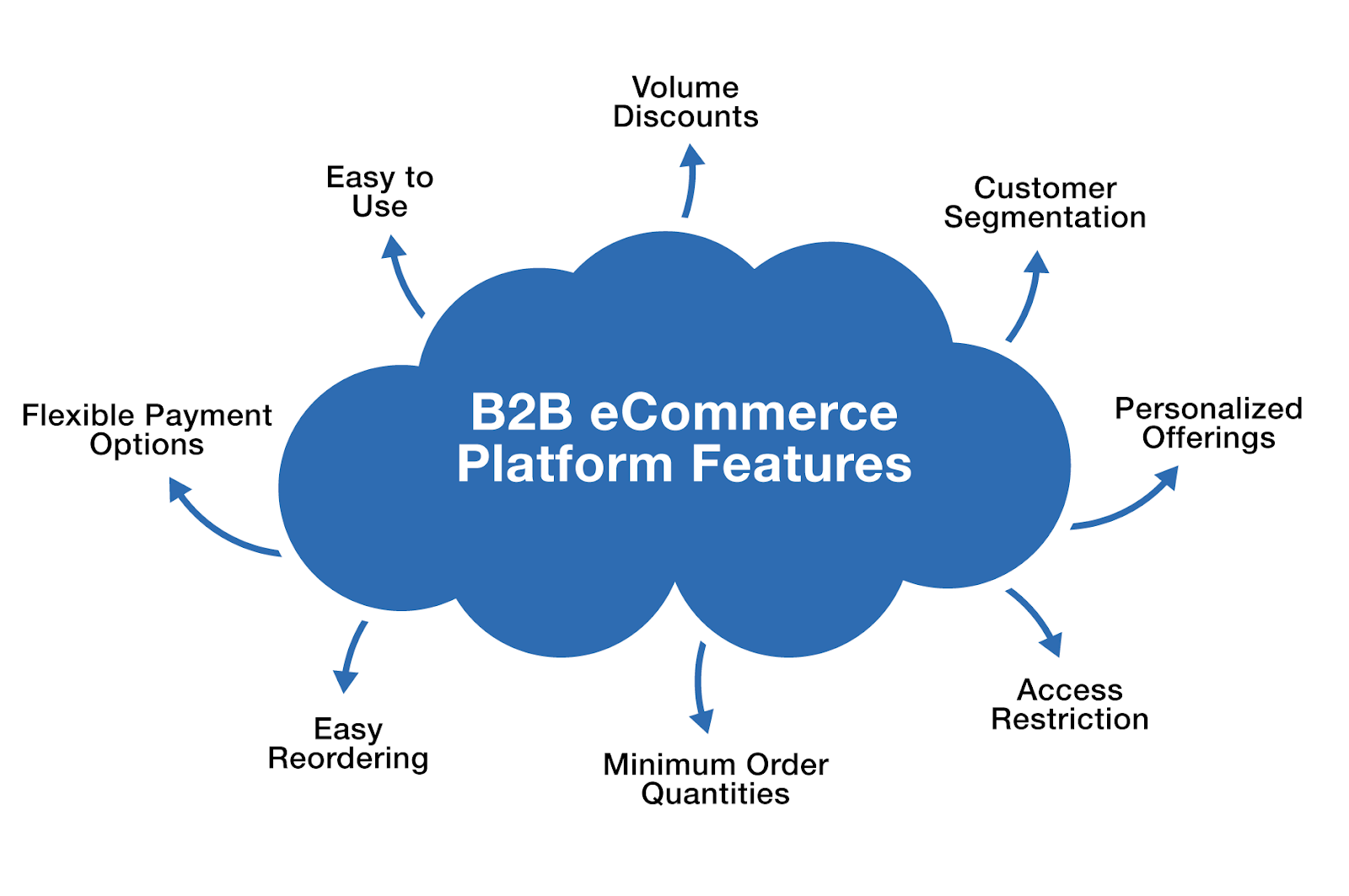
Your business will change. You might launch a new service model next year that you haven't even thought of today. Therefore, the platform must be extensible.
Extensibility means that developers can add new features or modify existing ones without ruining the ability to update the core software. This is why many growing businesses prefer platforms with a robust developer community and a clear API roadmap. If a platform is too rigid, you will eventually outgrow it, leading to a painful and expensive migration process.
The "best" platform depends entirely on where you are in your journey and where you intend to go.
A common mistake is looking only at the "sticker price" of a platform license. To understand how to choose the best B2B eCommerce platform for long-term growth, you must look at the Total Cost of Ownership (TCO).
TCO includes everything required to keep the site running over a 3-to-5-year period:
Sometimes, a "free" open-source platform ends up costing more than a paid SaaS (Software as a Service) platform because of the high costs of hosting and manual maintenance.
The ultimate goal of choosing a B2B platform is to drive a return on investment. This happens in two ways:
Choosing the best B2B eCommerce platform for long-term growth requires balancing scalability, flexibility, integrations, and cost. It is a strategic move that goes far beyond just picking a piece of software; it is about building a foundation for your company's future. Businesses that evaluate platforms through a growth-first lens—considering how their needs will change in the years to come—are better positioned to scale efficiently, adapt to market changes, and avoid the heavy costs of repeated migrations. By focusing on your long-term goals and choosing a platform that can grow with you, you ensure that your digital presence remains a competitive advantage for years to come.
.png)

